Mostrando entradas con la etiqueta Johnston Canyon. Mostrar todas las entradas

lunes, 6 de febrero de 2017

JOHNSTON CANYON: INK POTS

Click here to read the English version


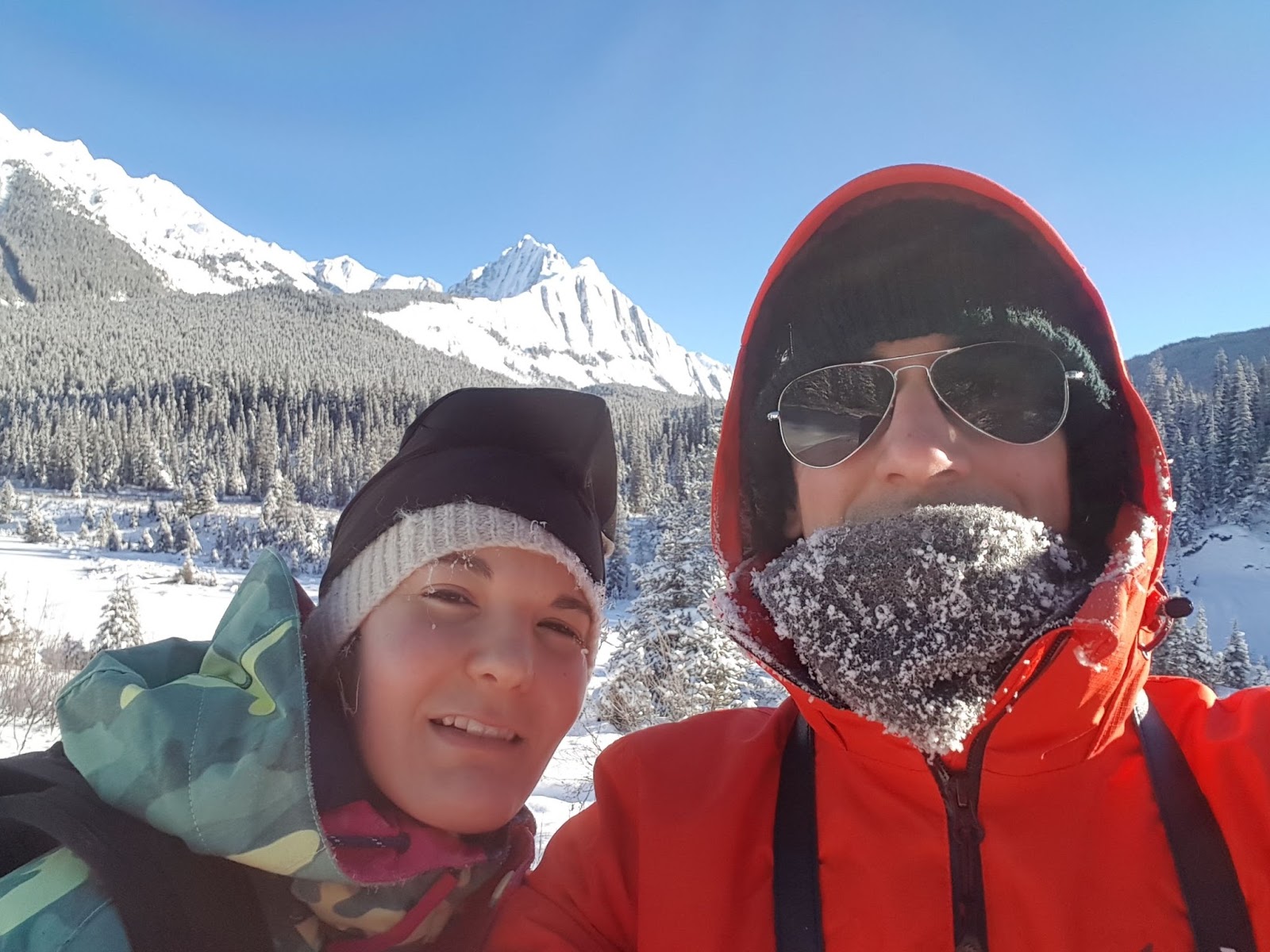
Al ir al Johnston Canyon tuvimos una suerte inmensa con la meteorología. Hacía fresquito (entre 20 y 25 bajo cero) pero no había ni una nube. 


El día era perfecto e íbamos bien abrigados así que una vez vistas las upper falls decidimos seguir caminando hacia los Ink Pots. No sabíamos lo que eran pero estaban a unos 4 km por lo que tampoco íbamos a tardar una barbaridad en llegar hasta ellos.


Resultó que el camino es de una pendiente relativamente pronunciada, lo que unido al hecho de estar completamente lleno de nieve, hace que se avance bastante lento.


El sendero es bonito. Transcurre a través del bosque de abetos y de vez en cuando se llega a un claro en el que se puede confirmar que, efectivamente, estamos en las Montañas Rocosas.


Al final, después de batallar con la nieve y cada ez más con el frío, el bosque clarea y, casi de repente, llegamos a un valle inmenso (el Johnston Creek Valley) rodeado de inmensas montañas nevadas.


Ahí están los Ink Pots, que en inglés significa “tarros de tinta”. Son siete manantiales de agua fría (temperatura constante de 4 grados) cuyo lecho son arenas movedizas (quicksand en inglés) que burbujean debido a la constante salida de agua. 


Gracias al hecho de estar constantemente fluyendo a 4 grados su superficie no se congela completamente, por lo que se puede ver el movimiento de las arenas del fondo causado por la salida del agua. 


Estos manantiales se llaman Ink Pots porque en verano, ya sin nieve y hielo alrededor, y debido a sus diferentes profundidades y composición del agua (tremendamente cristalina) son como pequeños lagos de colores. Algunos son verdes, otros azules y otros turquesa, algo así como la paleta de Picasso en su etapa azul. Habrá que volver en verano, a horas no turísticas, a ver este espectáculo de colores.


Enrique & Marina
English version

JOHNSTON CANYON: INK POTS


The day we visited Johnston Canyon we got hugely lucky with the weather. It was cold (something between minus 20 and 25 degrees) but the sky was clear as. 


Despite the bitter cold, the day was perfect and we wore the right gear. Therefore we decided to carry on walking up to the Ink Pots. We weren’t sure about what would be waiting for us at the end of the trail. We only knew that it was about 4 km far from the upper falls, so it couldn’t be too far anyway. 


The trail becomes steeper after the last set of falls which along with the snowy ground made our move forward very slow. 


The scenery is beautiful. It takes you through a fir three forest and has a couple of lookouts in the middle that open your view to the incredible Rocky Mountains.


At the end, after dealing with the snowy path and when we started to feel some cold, the forest opens up to a surprisingly wide valley (Johnston Creek Valley) tucked between gigantically tall mountains. 


And there, in the middle you’ve got the Ink Pots. They are seven natural cold springs constantly at 4 degrees flowing out of a bed of quicksand. When you look at the bottom of the pools you can see the water and sand bubbling all the time. 


The pools never freeze because the water keeps its temperature above zero and therefore the surface stays partially liquid all year. They should be considered “hot springs” if compared with the air temperature!


The name of Ink Pots comes from the different colours that the pools display in the summer when there’s no ice or snow around. Depending on the depth and the minerals dissolved in the water each tiny lake will look different. Some will be green, others blue or turquoise, more or less like Picasso’s palette during his “blue period”. Well, we’ll have to come back in the summer to make sure the ink pots deserve their good name. 

Enrique & Marina

viernes, 27 de enero de 2017

JOHNSTON CANYON

Click here to read the English version


Entre Lake Louise y Banff se encuentra el Cañón Johnston. Es una excursión tan popular en verano que los nativos del lugar recomiendan encarecidamente no ir ni en pintura o, en caso de tener que aventurarse, hacerlo muy pronto por la mañana; casi antes de que salga el sol. Tal es la afluencia de japoneses, chinos y demás turistas. Este año además las previsiones son de colapso monumental ya que todos los parques nacionales de Canadá son de entrada gratuita con motivo de la celebración del 150 aniversario de la confederación canadiense (1 de julio de 1867).


El Johnston Canyon es el típico cañón fluvial de aguas cristalinas con un par de cataratas relativamente altas que recorta un bosque de abetos. Pero tienen una peculiaridad y es que en invierno, al estar a temperaturas alrededor de los 40 grados bajo cero, las cataratas se congelan. 


La caminata comienza en la carretera del Bow Valley, ahora en desuso debido a la construcción de la autopista transcanadiense, justo detrás del Johnston Canyon Lodge.


Es un recorrido muy bien indicado y mantenido que se inicia pasando por delante de la heladería, cerrada en invierno (¿Por qué?), y del árbol arqueado. En ningún lado explican por qué el árbol tiene esa forma, pero nuestra teoría es que es un árbol que de joven ignoraba a su madre y no se sentaba con la espalda recta. Ahora es una atracción turística y está en el álbum familiar de mucha gente.


Para llegar a las primeras cataratas, las lower falls, hay que caminar por un camino bien pavimentado con algunas pasarelas en voladizo que permiten ir sobre lo que en verano es el curso de agua pero que en invierno es una mezcla de nieve, hielo, agua líquida y pisadas de animales incautos. 


El sendero es relativamente llano y la distancia hasta las lower falls es de 1,1 km, así que en algo menos de media hora llegas a la primera remesa de cataratas congeladas. 


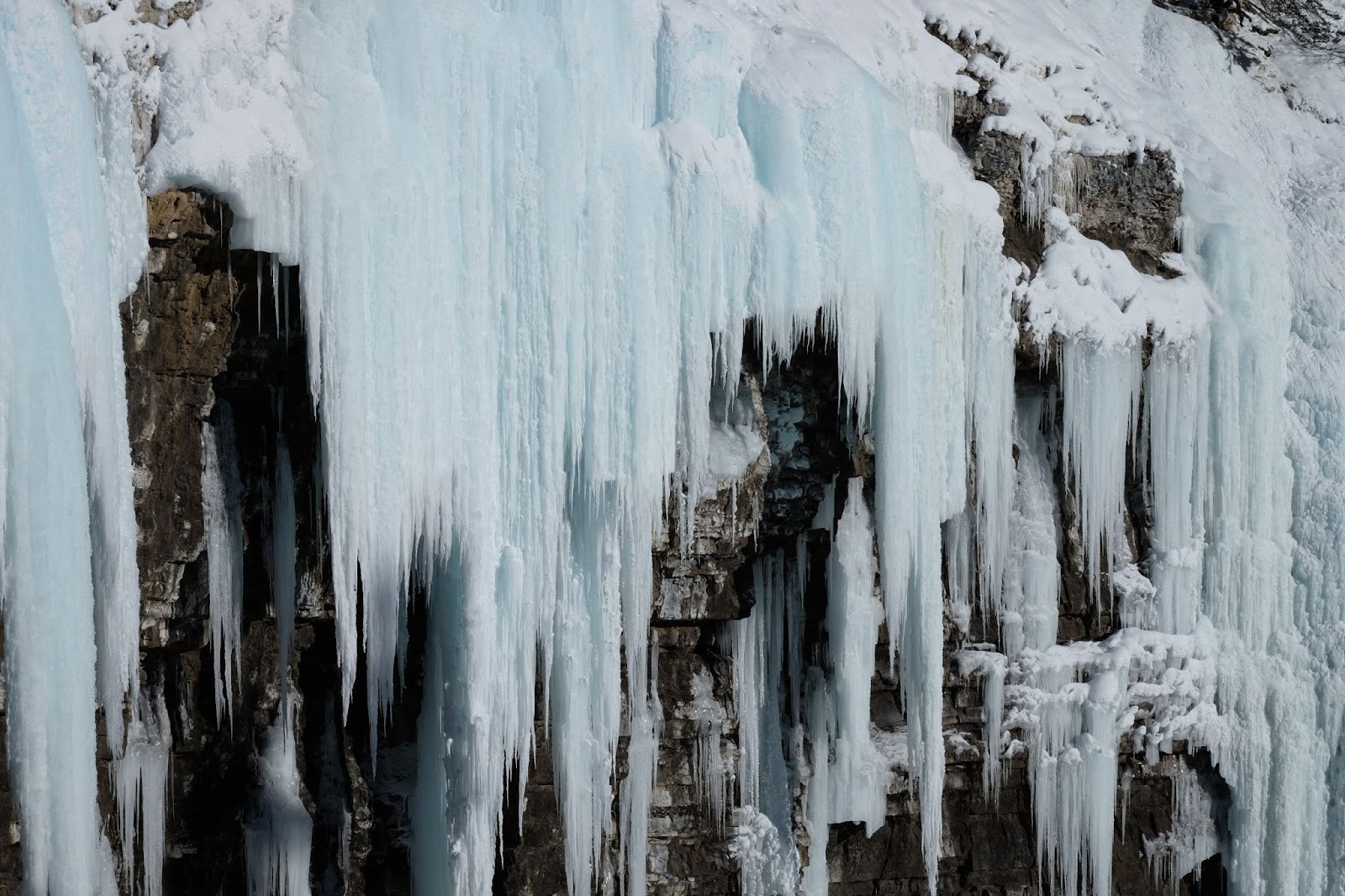
No son muy altas pero sí caudalosas. No sabemos a qué velocidad se congelan pero da la impresión que hasta la espuma y burbujas de aire están heladas alrededor del agua, haciendo que la pared rocosa parezca un bote de espuma de afeitar que se ha roto y ha dejado escapar todo su contenido.


El agua sigue fluyendo por entre el hielo y la roca por lo que cuando estás parado mirando las estalactitas y demás formaciones de hielo se puede escuchar el tronar del agua precipitándose desde lo alto de la pared rocosa. La verdad es que es bastante impresionante.

Caminando un par de km más, esta vez ya subiendo un poco más, en algo más de 45 minutos se llega a las upper falls, mucho más grandes que las lower falls.


Estás cataratas se pueden mirar desde abajo, con el riesgo de que parte del hielo se desprenda y te sepulte (esto se veía venir, y lo vimos, afortunadamente desde lejos) o desde una terraza que han montado en la parte superior.


La excursión al Johnston Canyon es relativamente sencilla, hay algún que otro tramo resbaladizo, y lo suficientemente corta como para no acabar helados con las temperaturas árticas que tenemos por aquí.


Enrique & Marina
English version

JOHNSTON CANYON


Half way between Banff and Lake Louise there’s Johnston Canyon. It’s such a popular walk in the summer that locals don’t even recommend you to go or, if you really want to, be there very early, by sunrise. It’s meant to be really crowded of Chinese, Japanese and tourists from pretty much anywhere in the world. This years it’s going to be particularly busy because the entry fee for all Canadian Natural Parks is free to celebrate the 150th Anniversary of the Canadian Confederation (from the 1st July 1867).


Johnston’s is the classic glacier river canyon with clear waters and a few considerably long water jumps shaped in the middle of a fir three forest. The interesting part of it is that now in the bitter cold of the Rockies’ winter the waterfalls freeze. 


The trailhead is located in the Bow Valley parkway (1A), currently underused because most people choose to take the Trans-Canada highway, just behind the Johnston Canyon Lodge.


The trail is clearly marked and well maintained and you can even find an ice cream shop closed during the winter and an odd shaped three at the very start. There’s no sing with a story about the tree so Enrique had to come up with something. He reckons that the tree didn’t listen to his mum  when a little child-three and used to sit down curving his back. Now the three is a tourist attraction and it’s probably in the family pictures book of many people all around the world.


To get to the first set of waterfalls you have to walk on a well prepared ground and some projected catwalks built over what it’s a creek during the summer and now it’s a mixture of ice, liquid water  and snow with unwary animal footprints. 


The track is mostly flat and the distance to the first falls is only 1,1 km, so basically in about half an hours at the most you’re in the first lot of frozen waterfalls. 


The jump in not very long but the flow looks generous. We have no clue about the freezing speed of the water but the edges around the main frozen river bed look like the bubbles and the foam of a flowing waterfall and the rocky wall on the side looks like covered with rock solid shaving foam. 


Liquid water keeps flowing between the ice and rocks and if you’re quiet while looking at the icicles and the rest of the ice formations you can ear the creek roaring as it drops to the lower level. It’s a pretty impressive view. 

Walking just a couple more km’s, this time a little bit steeper, in less than 45 minutes you reach the upper falls which are way bigger than the lower set. 


There’re two view points to enjoy them. There’s a lookout located on a catwalk at the bottom of the drop and another one a bit further up the track in a balcony built just above the waterfall. The lower viewing platform seems kind of dangerous since the icicles seem that they can become unattached at any time (something that we actually witnessed from the safety of the upper balcony).


Visiting Johnston Canyon should be considered a pretty easy walk even in the winter despite a couple of slippery icy patches. Besides, the time required is short enough to not get very cold even at the under -30 degrees we sometimes reach in the Rockies.  


Enrique & Marina