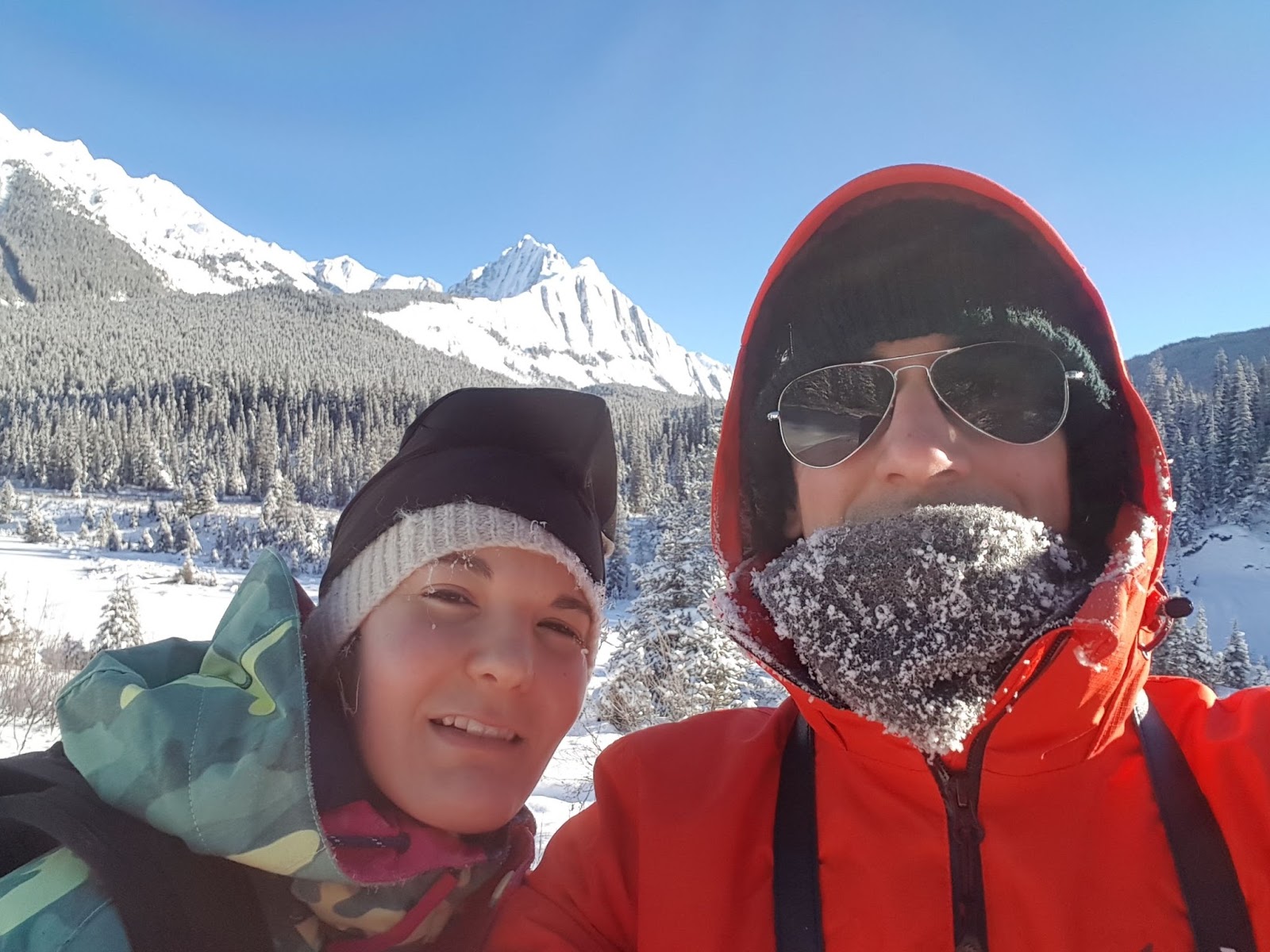
jueves, 2 de marzo de 2017

ESQUIANDO EN LAKE LOUISE SKI RESORT

Click here to read the English version


Hasta hace unos días hacía demasiado frío para ir a esquiar. La gente con pases de temporada iba hasta las pistas para hacer un par de bajadas y volvían al pueblo con la nariz marrón debido a la congelación. Pero últimamente la temperatura ha subido lo suficiente como para que salir de casa no sea como meter la cabeza en cubo lleno de hielo.


Los astros se alinearon también y este buen tiempo coincidió con el Fam Day, que es un día en el que a los habitantes del pueblo les ofrecen un pase de un día para las pistas y todo el material de esquiar por una cuarta parte de lo que cuesta el forfait de día. Un chollo.


Así que Marina y yo nos aprovechamos de esta alineación astral y nos fuimos a probar las pistas.


El día fue perfecto. Estábamos a unos 5 grados bajo cero, nevaba bastante, no hacía viento y casi no había gente en las pistas. Y aunque hubiese habido gente daba igual ya que la estación es gigantesca. 


El punto más elevado de la estación se encuentra a 2637 m y el area esquiable son 1700 hectáreas. De las 139 pistas marcadas la más larga es de 8 km (es un poco aburrida porque es relativamente llana) aunque tienen lo que llaman “back bowls” que sería la ladera trasera de la montaña donde básicamente bajas por donde buenamente puedes.


Marina esquió y yo hice snowboard, como de costumbre. La nieve estaba espectacular: llevaba un par de días nevando cuando fuimos así que era todo nieve polvo muy seca, nada de capas de hielo o demás incordios.


Las pistas son muy largas y no tienen demasiada pendiente, aunque una vez arriba de todo de la montaña puedes bajar un poco por donde te dé la gana, en principio sin riesgo de aludes. Así que hay pistas para todos los gustos y niveles.


Nos lo pasamos evidentemente muy bien aunque probablemente nuestro deporte de invierno siga siendo más el esquí de fondo que el alpino.


Enrique & Marina
English version

SKI IN LAKE LOUISE


For a while it was too cold for us to go skiing. Our mates with the ski pass went to the hill to do a couple of runs and came back with their nose tips black and frostbitten. But lately the temperatures have been milder and getting out of the house didn’t feel like a putting your head in an ice bucket. 


Karma was on our side and the good weather came at the same time as we had our FAM day. This is a day when people who lives in Banff and Lake Louise area can apply for a package that includes lift tickets, gear rental and beginners lessons if needed for less than a forth of the regular price. A real bargain.


We took advantage of the weather and the deal and went to check the hill out.


We had a perfect day. It was about 5 degrees negative, the snow was gently falling, there wasn’t any wind at all and the resort was nearly empty. Or maybe there it wasn’t but it didn’t matter because it’s that big. 


The maximum elevation of Lake Louise is 2,637 m and the skiing area counts with 1,700 hectares. There are 139 runs being the longest up to 8 km. This one is a bit of a boring track since it’s too flat and we found it too slow as opposed to the so called “back bowls” which are a group of very steep  basins located in the north face of the mountains with no real tracks and where you have to find your own way.


I skied and Enrique went snowboarding as usual. The snow conditions were great: it had been snowing for a couple of days, everything was covered with very nice dry powder and we didn’t see a single patch of ice. 


We loved the very long runs we have here and we choose mostly blue tracks and went down a few blacks that weren’t too fast. But once at the top of the lifts there’re options for everyone and no risk of avalanches, since the maintenance of the station takes care of this issue. 


It was such a great day and we had an awesome time but we still prefer cross country better than down-hill. 

Enrique & Marina

viernes, 17 de febrero de 2017

AMANECE EN LAKE LOUISE

Click here to read the English version


Hace unos días decidimos aprovechar que estamos muy al norte y rodeados de montañas, hecho que facilita enormemente ir a ver el amanecer: el sol no sale antes de las 9 de la mañana así que tampoco hay que madrugar una barbaridad para ir a verlo. Por cierto, en la foto superior el Ninja que está a mi lado es Marina, y al parecer está sonriendo.


Nos levantamos, desayunamos y subimos hacia el lago done, sorpresa, nos encontramos a medio Shangai.


Lake Louise está congelado en invierno, pero en la zona donde desagua hacia del Louise Creek el agua está fluyendo constantemente por lo que el hielo no se acaba de formar. En ese punto, y teniendo en cuenta que Lake Louise está protegido del viento, se pueden ver las montañas reflejadas.


La misión era ir a ver el amanecer a ese punto en articular, ya que se podría ver como los rayos del sol iluminan las cimas de las montañas y la luz se refleja en los glaciares, con el pequeño trozo de lago sin congelar actuando de espejo.


Pues bien, parece que no somos los únicos con ideas de este tipo. Llegamos a Lake Louise con tiempo suficiente para buscar un buen sitio y esperar, pero no mucho, que aquí hace un frío que pela.


En el lugar que teníamos pensado ya había una reunión de fotógrafos amateurs chinos con cámaras ya medio congeladas más caras que un coche (a saber desde cuándo llevaba esa gente ahí), con filtros en las lentes, trípodes con más tecnología que los que usan los topógrafos en los teodolitos, maletas con recambios para la cámara, chaquetas para expediciones antárticas y un silencio sepulcral.


Esto es divertido, si cambiásemos a estos chinos por españoles, italianos o incluso canadienses la escena habría sido probablemente diferente: en lugar de personas quietas y silenciosas haciendo guardia tras sus extremadamente caras cámaras como si fuesen francotiradores de élite de los Navy SEAL americanos, habríamos visto las cámaras listas a un lado y la gente hablando del tiempo en un círculo al otro completamente ajenos al sufrimiento de sus cámaras no tan caras.


Pero lo que había ahí eran chinos de élite listos para robarle el alma al sol, y ello requiere silencio sepulcral. Hasta que, evidentemente, llegan las dos amigas chinas de unos veintipocos años de edad que viajan por el mundo, que todo mochilero que se precie ha encontrado alguna vez y por ello las teme, que son algo así como una serie de catastróficas desdichas andantes. Llegan a una zona con dos palmos de nieve con zapatos de tacón, llevan las cámaras en maletas rosas de Hello Kitty y, al intentar estacionar el trípode se caen estando a punto de causar un efecto dominó con todos su compatriotas. A estas dos Chinas del Apocalipsis nos las hemos encontrado en Nepal (las que secaban la parte exterior de la mochila con kleenex cuando llovía), en Nueva Zelanda, en Australia, en Indonesia e incluso en Filipinas. Verlas venir genera un desasosiego peor que ver a un gato negro cruzarse en tu camino mientras pasas por debajo de una escalera derramando un tarro de sal sobre un espejo que se rompe.


En fin, todos los allí presentes sobrevivimos a esas dos desgracias vivientes y pudimos ver un amanecer muy bonito. Después de tomar las fotos de rigor nos dimos cuenta de que no sentíamos los pies de lo fríos que estaban así que nos fuimos hacia el Fairmont Chateau a recuperar un poco de temperatura y luego bajamos caminando hacia el pueblo de Lake Louise.


Enrique & Marina
English version

SUN RISES IN LAKE LOUISE


A few days ago we went to see the sunrise. Lake Louise is located at a very northern latitude and surrounded by mountains which delays quite a lot the time that the sun starts shinning. Now, which is the middle of the winter, the sun comes out at around 8.30. That’s actually awesome because you don’t have to wake up very early to see it. 


We woke up, had breakfast and went up the lake where, surprise!, we found about half of the population of Shangai already there.


The Lake itself is frozen the whole winter so no reflections. But there’s a tiny patch of water that stays liquid during the cold months. It’s the outlet that feeds Louise creek and probably due to the constant flow it never freezes. At that particular spot and because the bowl of the lake is very well sheltered from any wind, you can see the reflections of the mountains pretty much always. 


The mission of the day was to see the firsts lights of the day bathing the tips of the snow capped mountains and how the glaciers sparkle with the first sunlight and maybe see all this reflected in the patch of water acting as a mirror. 


We made it to the Lake Louise with enough time to find a nice spot but not too long ahead because you don’t want to be waiting in this painful cold for too much. But unfortunately we were not the only people with that mission for the day.


In our chosen site there already was a conference of Asian photographers. There was more money  worth in photography gear in that little section of the lake shore than in any good detail store. We wonder for how long they had been there setting up. They all had strange filters for their lenses, tripods that could probably be good enough for land surveying tasks, weekend-sized suitcases with extra lenses, filters, batteries and who knows what else. Their outfit was up to the standard too: Antarctic expedition jackets, fur gloves and boots that could easily come from an outer space mission. And, for a change, they were all very quiet. 


If we picture the same situation with Italians, Spaniards or even Canadians it would have been so different. Instead of a quiet group of people minding their own very expensive cameras objectives like American Navy SEAL snippers stalking over their victims, the situation would have probably been a display of different middle range cameras ready to shot in one side and one or several little groups of people loudly discussing the weather (particularly loud if the speaker is from the Mediterranean coast) or last night’s dinner among themselves and not looking too worried about their not-so-fancy cameras.


But what we had there was definitively the elite of the Asian amateur photographers, up to steal the Sun’s soul if required to get the perfect holiday photo. And this needs silence. Fair enough, now I’m serious. A good picture takes work, effort and concentration. 

That was all fine despite the couple of time that we were asked to move because someone needed that particular bit of the earth’s surface to be clear. Until here they came, the classic couple of young Asian girlfriends backpacking the world that we all have encountered and fear. Loudly they made it to the shore when the sun had already been out for a while (a.k.a. late) with their pink little trainers and their Hello Kitty suitcases. The two girlfriends produced tripods to be set in the snow, action which could have caused a domino effect to the other Asian tripods but luckily didn’t. We’ve encountered these two girls of the Apocalypses in pretty much all the countries we’ve visited. They’re probably not exactly the same couple all the time following us but they could be family. When they come along our reaction is always the same: it’s time to run away. 


This plus that we were happy enough with the pictures we took and, overall, that we started to feel our fingers and toes numb with cold meant it was the time to really head off. Well, actually head into the Fairmont to try to get the mobility of our extremities back. That was pretty important not only because we don’t want to lose our body parts but also because we needed our feet to walk back to the village.

Enrique & Marina

lunes, 6 de febrero de 2017

JOHNSTON CANYON: INK POTS

Click here to read the English version


Al ir al Johnston Canyon tuvimos una suerte inmensa con la meteorología. Hacía fresquito (entre 20 y 25 bajo cero) pero no había ni una nube. 


El día era perfecto e íbamos bien abrigados así que una vez vistas las upper falls decidimos seguir caminando hacia los Ink Pots. No sabíamos lo que eran pero estaban a unos 4 km por lo que tampoco íbamos a tardar una barbaridad en llegar hasta ellos.


Resultó que el camino es de una pendiente relativamente pronunciada, lo que unido al hecho de estar completamente lleno de nieve, hace que se avance bastante lento.


El sendero es bonito. Transcurre a través del bosque de abetos y de vez en cuando se llega a un claro en el que se puede confirmar que, efectivamente, estamos en las Montañas Rocosas.


Al final, después de batallar con la nieve y cada ez más con el frío, el bosque clarea y, casi de repente, llegamos a un valle inmenso (el Johnston Creek Valley) rodeado de inmensas montañas nevadas.


Ahí están los Ink Pots, que en inglés significa “tarros de tinta”. Son siete manantiales de agua fría (temperatura constante de 4 grados) cuyo lecho son arenas movedizas (quicksand en inglés) que burbujean debido a la constante salida de agua. 


Gracias al hecho de estar constantemente fluyendo a 4 grados su superficie no se congela completamente, por lo que se puede ver el movimiento de las arenas del fondo causado por la salida del agua. 


Estos manantiales se llaman Ink Pots porque en verano, ya sin nieve y hielo alrededor, y debido a sus diferentes profundidades y composición del agua (tremendamente cristalina) son como pequeños lagos de colores. Algunos son verdes, otros azules y otros turquesa, algo así como la paleta de Picasso en su etapa azul. Habrá que volver en verano, a horas no turísticas, a ver este espectáculo de colores.


Enrique & Marina
English version

JOHNSTON CANYON: INK POTS


The day we visited Johnston Canyon we got hugely lucky with the weather. It was cold (something between minus 20 and 25 degrees) but the sky was clear as. 


Despite the bitter cold, the day was perfect and we wore the right gear. Therefore we decided to carry on walking up to the Ink Pots. We weren’t sure about what would be waiting for us at the end of the trail. We only knew that it was about 4 km far from the upper falls, so it couldn’t be too far anyway. 


The trail becomes steeper after the last set of falls which along with the snowy ground made our move forward very slow. 


The scenery is beautiful. It takes you through a fir three forest and has a couple of lookouts in the middle that open your view to the incredible Rocky Mountains.


At the end, after dealing with the snowy path and when we started to feel some cold, the forest opens up to a surprisingly wide valley (Johnston Creek Valley) tucked between gigantically tall mountains. 


And there, in the middle you’ve got the Ink Pots. They are seven natural cold springs constantly at 4 degrees flowing out of a bed of quicksand. When you look at the bottom of the pools you can see the water and sand bubbling all the time. 


The pools never freeze because the water keeps its temperature above zero and therefore the surface stays partially liquid all year. They should be considered “hot springs” if compared with the air temperature!


The name of Ink Pots comes from the different colours that the pools display in the summer when there’s no ice or snow around. Depending on the depth and the minerals dissolved in the water each tiny lake will look different. Some will be green, others blue or turquoise, more or less like Picasso’s palette during his “blue period”. Well, we’ll have to come back in the summer to make sure the ink pots deserve their good name. 

Enrique & Marina