jueves, 10 de octubre de 2013

JOHN CLEESE ESTUVO AQUÍ


Click here to read the English version


Volvemos a estar por aquí para redimirnos del abandono de septiembre. Actualmente estamos en la ciudad de Palmerston North. Estamos con Fay (82 añazos), la madre de Sue Pugmire, que nos ha acogido mientras Sue y Ralph han ido a Auckland a buscar un coche eléctrico que han importado de Japón. Como la autonomía del coche (Nissan Leaf) es de 120 km tienen que hacer el viaje en varios días. Todo por la Tierra.


En fin a lo que iba. John Cleese, famoso comediante inglés miembro de los Monty Python, vino de visita por Palmerston North en el año 2006. Una vez de vuelta en la seguridad de su hogar en la madre patria Inglaterra describió la ciudad como horrible. De hecho dijo que era tan horrible que si alguien no era lo suficientemente valiente como para suicidarse sólo tenía que irse a pasar una semana a Palmerston North, la capital neozelandesa del suicidio.

Los kiwis en general tienen bastante sentido del humor pero estos comentarios no le gustaron al alcalde de la ciudad. Una persona normal habría optado por quejarse, invitarle a volver y encargarse de que se lo pasase bien, ficharle para hacer promoción del turismo de la zona… este señor no. Lo que hizo el señor alcalde fue crear un nuevo vertedero municipal y llamarlo “John Cleese Memorial Tip”, que en castellano es “Vertedro John Cleese”. Donde las dan las toman y aquí han pagado al señor Cleese con su misma moneda.

Dicho esto la ciudad no es gran cosa, la verdad, pero es muy tranquila y la verdad es que se está muy bien. Hoy, por ejemplo, hemos estado paseando y nos hemos encontrado con el siguiente cartel al lado de unas escaleras.


En él pone “Patinadores, el Ayuntamiento os ha construido el mejor skatepark de todo Nueva Zelanda en la esquina de Church con Pitt. ¿Por qué no usarlo? Es ya uno de los equipamientos más utilizados de la ciudad”. Aquí no se molestan en prohibir utilizar el mobiliario urbano como objetos “patinables”, te sugieren amablemente que te marches a la zona dedicada a ello. Si optas por no hacer caso ya te enfrentarás a un machote policía maorí de más de dos metros de altura y 150 kg de peso.

Pero hay una cosa que hace única  a esta ciudad, al menos en Nueva  Zelanda. Dejamos la foto porque sobran las palabras.


Ya para acabar esta breve actualización ponemos un par de fotos de los animales de la familia Pugmire. A los caballos los conocimos al ir a buscar abono para el huerto, actividad glamurosa donde las haya. Son todos familia y muy simpáticos todos.


A las terneras las conocimos al ir a darles el biberón. Hay que decir, por eso, que estas terneras no son huérfanas. Yo no sé si esto también se hace en España, pero aquí te venden un ternero a los cuatro días de nacer por 30 dólares (20 euros). Cada paquete de leche en polvo cuesta 200 dólares y en general cada animal necesita dos paquetes hasta que deja de tomar leche por lo que en realidad el animal te sale por 400 dólares.


¿Cuál es el truco? Pues que pasado este tiempo el ternero ya se puede vender a peso, con lo que se recupera la inversión y además se ganan unos dinerillos. En el caso de los Pugmire quieren las vacas para que sean lecheras (Sue y Ralph no, que son veganos) así que su destino no es el matadero.

La Kumara

La kumara, o patata dulce neozelandesa, no siempre ha estado en la Tierra. Antiguamente se encontraban únicamente en el cielo custodiadas por el Dios estrella Whanui (léase Fanui, el Te Reo, idioma maorí, no tiene alfabeto así que el inglés que empezó a transcribirlo decidió que "wh" representaría al sonido "f"), que era su padre.

En las tierras del guerrero Mataora había una pareja, Rongo y Pani, que escucharon que este sabroso tubérculo podía encontrase en el Cielo. Ni corto ni perezoso Rongo subió hasta el cielo y llegó hasta la estrella Whanui, que tenía las kumaras a su lado. Rongo le preguntó si podía darle un par a lo que Whanui se negó.

Rongo aceptó la negativa y se puso a fingir que dormía. En el momento en que el Dios estrella Whanui se durmió, Rongo se levantó, robó unas cuantas kumaras y volvió a su casa. Whanui, al despertarse, entró en cólera y bajó a la Tierra. Era el primer robo de la Historia, tanto en el Cielo como en la Tierra.

Desde ese día los sabios de las tribus saben que en el primer día de primavera en que se puede ver la estrella Whanui en el firmamento es el momento de plantar las kumaras, pero bien enterradas en el suelo, para que su padre no las pueda ver y reclamar.

Y esto es todo por ahora, nuestra siguiente parada: Wellington, la capital.

Enrique & Marina
Enlish version


We’re back on the internet to buy our redemption for all the silence during September. Currently, we’re in Palmerston North. We’re with Fay (82 years of age and wisdom), she’s Sue Pugmire’s mother. She’s taking care of us while Sue and Ralph are gone to Auckland to pick up their new completely electric car which actually comes from Japan. This new vehicle (Nissan Leaf) can run only for up to 120 km in between charges, so they have to do a few stopovers to top-up the battery overnight. Sounds like a little bit of trouble, but the Planet is worth it!


But let’s focus. John Cleese, a well-known English comedian and one of the members of Monty Python, came to play at Palmerston North in 2006. Back at home, in Mother England, he described the city as horrible place. What he really said was that Palmerston North is that ugly that it someone is not brave enough to commit suicide, he just has to spend a week in the city, the New Zealand capital of suicide.

Although Kiwis usually have a very good sense of humour, the Major of the city didn’t like Clesse’s comments at all. Any other person would had chosen just to complain about it, invite the celebrity to come back and take care that he has good fun in the area and turn the comments into profitable advertising material. The Major didn’t do this. He opened a new tip and gave it his name: “John Cleese Memorial Tip”.  

Having said that, the city isn’t anything special, but we can say is very quiet and confortable. Today we’ve come across this signpost.


They can’t be bothered forviding things here, they just suggest you to do the right thing. If you choose not to do it, you’ll have to talk to the 2 meter tall and 150 kg weight maorí pólice officer. Good luck.

But there’s something that makes this city unique, at least in New Zealand. They have a pub sponsored by the Barcelona’s most renowned brewery: Estrella Damm. Fantastic.


Just to finish this update here you have a couple of pictures of the animals of the Pugmire family. We met the horses when we went to their paddock for some manure, glamorous activity. They are all relatives.


We met the calves when we went to feed them. They are not orphans, though. Here you can buy a four day old calve for only 30 bucks. You’ll have to pay for the milk powder (200 bucks a bag) so you’ll end up paying almost 400 NZD for each calve.


Where’s the trick? Easy. After this time you can sell the calve by weight, so you can recover your investment and maybe win some Money. The Pugmire’s want the calves to become milking cows (not Sue and Ralph, vegans) so they are not going to the slaughterhouse.

The Kumara

The kumara or sweet potato hasn’t been always on Earth. In the Old Days they were only in the Sky under the protection of the star Whanui, their father.

In Mataora’s land there were a couple, Rongo and Pani, that heard that these tubers could be found in the Sky. Rongo climbed to the Sky and got to the star Whanui, who had the kumaras. Rongo asked about taken some of them, but Whanui refused.

Rongo went to a corner of the room and pretended he was overcome by fatigue after his long journey. When Whanui felt sleep Rongo stole some kumaras and went down to his village. When Whanui woke up he got very angry and went down to the Earth. This was the first time that something had ever been stolen in land or sea or sky.

Since then, the wise men of the tribes know that the first day in spring when you can see the star Whanui in the sky, it’s time to plant the kuamras, but well buried in the ground, so that their father can’t see them.

And that’s all for now, our next stop: Wellington, the capital.

Enrique & Marina

lunes, 7 de octubre de 2013

ALTERNATIVAMENTE


Hemos estado una semana con Sue y Ralph Pugmire en su casa a las afueras de Palmerston North. Sue es música (famosa en Nueva Zelanda) y Ralph es Doctor en Física especializado en robótica, aunque se dedica a la programación.


Viven en una casa que llevan construyendo ellos mismos desde el año 2000 en unos terrenos (50 hectáreas) a pocos quilómetros de la ciudad. Es una casa de tres pisos situada en medio del valle, con un riachuelo a un lado, un pequeño lago en la parte trasera y las montañas al otro lado. Una pasada. No está conectada a la red eléctrica, ni al gas ni al agua. Son autosuficientes energéticamente.


La electricidad la obtienen mediante placas solares y un pequeño aerogenerador. Esto hace que algún día (nublado y sin viento) no sea conveniente usar el microondas o encender muchas luces a la vez si quieren que la nevera siga funcionando durante la noche. Exceptuando esto, la diferencia es imperceptible.


El agua la calientan mediante un sistema solar que utiliza una especie de tubos de cristal que concentran la luz (funciona incluso estando nublado) y transfieren su energía al agua, que llega, como mínimo, hasta 65 grados de temperatura. Increíble. En invierno conectan la chimenea con las tuberías de agua caliente, lo que les da un extra de calor (esta técnica también la utilizamos con Rob y Judith en Kyneton) que seguro se agradece si se quieren duchar una vez ha anochecido.


En cuanto a lo más chocante para nosotros ha sido la alimentación: son veganos. ¿Veganos? Hace un año los médicos avisaron a Ralph de que tenía muchos números para desarrollar diabetes y que por ello debía tomar un montón de medicamentos. No les acabó de convencer la historia de las medicinas y decidieron que lo que harían sería cambiar sus hábitos alimenticios. Empezaron una dieta vegana, esto significa no comer carne, ni pescado, ni productos lácteos, ni huevos (la pasta se hace con huevo)… en definitiva nada que provenga de animales.


Parece que la apuesta les ha salido ganadora así que son oficialmente veganos, aunque no radicales (tienen un yerno que hace quesos muy ricos). Entre acelgas, zanahorias, judías y demás verduritas, hemos descubierto que con leche de almendras, plátano y frutos rojos se hacen unos batidos riquísimos y que con harina y agua se pueden hacer unos buenos rebozados (Marina hizo ajos tiernos con maíz y le quedaron muy buenos). Debo confesar que al principio esta dieta no me convencía en absoluto, pero no está mal. De todas formas con una semana he tenido suficiente.

A cambio de vivir aquí, Marina y yo hemos hecho de jardineros. Hemos arreglado el pequeño huerto que tienen, ahora que ha acabado el invierno y se puede preparar todo para plantar. Siempre nos olvidamos de hacer una foto antes de nuestro trabajo y otra después, para comparar, pero esta vez Marina se acordó. Aquí os dejamos las fotos.


No tienen televisión pero sí muchísimos DVD’s y libros muy interesantes, por lo que aquí no se aburre nadie. Entre los libros he encontrado uno de leyendas y mitología maorí (Miths and legends of Maoriland escrito en 1946 por A.W. Reed) muy interesante del que intentaré explicar algunas historias en el blog.

Mataora y Niwareka

Mataora, jefe guerrero, estaba dormitando cuando se dio cuenta de que unas figuras humanas le estaban observando: las Turehu del Inframundo. Eran altas y esbeltas, con la nariz delgada y la piel muy pálida. Las agasajó preparando sus mejores recetas a lo que ellas hicieron ascos, ya que en el Inframundo  no cocinan los alimentos. Mataora fue a pescar y les dio los pescados crudos, que se comieron encantadas. Una cosa llevó a la otra y Mataora se enamoró de la Turehu más alta, Niwareka, la pidió en matrimonio y las otras accedieron así que ahí los dejaron.

La pareja fue feliz hasta que Mataora, en un ataque de ira, la pegó. Niwareka no iba a dar opción a una segunda rabieta así que se escapó de la casa de Mataora y volvió al Inframundo, al poblado de su padre. Cuando Mataora volvió a sus cabales se dio cuenta de lo que había hecho y decidió a ir a buscar a Niwareka al Inframundo, aunque fuese peligrosísimo. Visitó la Casa de los Cuatro Vientos, que le guiaron hasta la entrada del túnel que comunica nuestro mundo con el Inframundo, vigilado por Tiwaika, que guió a Mataora hasta la salida.

El Inframundo resultó ser un lugar sin Sol ni Cielo pero lleno de Luz y Agua, donde la felicidad estaba por todas partes. Mataora fue hasta la aldea de Niwareka, en busca de Ue-Tonga, su padre y jefe del tinglado. Lo encontró sentado en el suelo, utilizando un cincel de hueso para hacer cortes en la cara de un hombre tumbado ante él, a los que les echaba un pigmento cuando la sangre brotaba. Escandalizado por la imagen Mataora exclamó que así no se tatúa, a lo que Ue-Tonga le dijo que se acercara. Le pasó la mano por la cara y las líneas azules, rojas y blancas que la decoraban se emborronaron, porque estaban simplemente pintadas. Una vez hecho esto Ue-Tonga le dijo a Mataora que en el Inframundo esculpen directamente en la carne para que el moko (tatuaje facial) sea perpetuo y verdadero. Mataora se avergonzó tanto de su moko pintado que le pidió a Ue-Tonga que tallase uno nuevo en su cara.

El dolor era tan grande que Mataora empezó a llamar a Niwareka, que llegó cuando Ue-Tonga acabó de tatuar, por lo que su cara estaba tan hinchada que era irreconocible, pero afortunadamente reconoció su cuerpo. Una vez cicatrizó le pidió a Niwareka que volviese con él, a lo que Ue-Tonga accedió sólo cuando Mataora le aseguró que lo del pegar se iba a acabar. Le dijo que llevase la luz del Inframundo a su mundo, lleno de oscuridad, así como la paz y el amor.

Mataora y Niwareka fueron al túnel que comunica ambos mundos y acabaron llegando hasta la Casa de los Cuatro Vientos, donde el Guardián les esperaba. Vio que Niwareka llevaba una bolsa y le preguntó qué guardaba, a lo que ella respondió que nada. El Guardián, espíritu listo, se dio cuenta de la mentira y se lo hizo saber, a lo que Niwareka confesó que lo que llevaba era el Vestido de Te Rangiahauhapa, que pretendía usar como patrón. El Guardián se enfadó y les avisó que de ahora en adelante el túnel quedaba cerrado, excepto para los espíritus de los muertos en su viaje al Inframundo.

Mataora fue quien dio a los hombres el secreto del moko que no se puede borrar y Niwareka quien enseñó a las mujeres a tejer en el Principio de los Tiempos.

Ya para acabar os dejamos una foto de la polilla más grande que uno se puede encontrar en Nueva Zelanda, que no es muy grande comparada con las de Australia, pero sí mucho más bonita.


Enrique & Marina

English version


 We’ve spent a week with Sue and Ralph Pugmire at their house in Palmerston North. Sue is a musician (she’s well known in the area) and Ralph is a doctor in Physics specialized in robotics, but he works as a computer programmer, a subject which he also likes.


They live in a house located in a huge block of land a few kilometers far from the CBD. They’re also owner builders and they’ve been working on their place since the year 2000. Their home is three storey building in the middle of the valley, the river is one of the boundaries, there’s a lake in one side of the property and mountains in the other side. The combination is really nice. Besides, they’re not hooked to the electricity, gas or water networks. They’re self-sufficient talking about energy and water!


The power comes from some solar panels and little aero-generator. This means that on a cloudy and not windy day you better avoid the use of the microwave oven or the toaster if you want to still have power for the fridge and the freezer. A part from that, you couldn’t tell that they’re not hooked.


The hot water comes from a solar heating system quite common that uses crystal pipes which focus the natural light (they work even on cloudy days) and transfer this energy to the water. The water can reach at least 65 degrees, maybe more, but that’s the maximum temperature we’ve needed. During winter, they also link the fireplace chimney with the hot water pipes, so they have an extra input of heat (this is the same system that the Bakes installed at their place recently). This may be very welcome as there’re less daylight hours and more hours with the fire going in winter.


But the biggest surprise for us was their diet: they’re mostly vegans. Vegans? A year ago Ralph’s doctor told him that he could develop diabetes and that would mean lots of medicines for him to take or change his diet. The idea of the drugs didn’t sound too well, so they chose to change the food they ate. They started their diet which means avoiding any meat, dairy products, eggs, etc. They’re doing that for health so they still have honey or some types of fish sometimes.


It looks like they chose well; they’re healthier than a year ago and happy with the change of habits. Between silverbeet, carrots, beans and other vegetables we’ve learnt that you can prepare delicious smoothies with bananas, frozen berries and soy or almond milk, that to make fritters or pancakes you don’t need egg and milk but wholemeal flour and water it’s enough.  Enrique wasn’t very excited about this diet but he’s confessed that is been pretty good. In my case, I absolutely loved all the fruit and vegetables we’ve eaten with Sue and Ralph! If I think about it, it’s pretty much the same diet we have at my parent’s home, although we sometimes have meat at lunch time (the main meal of the day in Spain) and my dad drinks dairy milk.

In exchange of living with them, we’ve prepared their vegetables garden for the spring-summer season. Weeds and grass grew all over the place in winter and now it was time to get the patches back. We always forget to take pictures of places before and after our work to compare. Lucky this time I remembered to do it. Here you have the pictures.


They don’t have TV but they’ve got lots of DVD’s and thousands of good books, so there’re lots of things to entertain you. Enrique’s found one about Maori myths and legends (Myths and legends of Maoriland written in 1946 by A.W. Reed). Here is a short summary of a story.

Mataora and Niwareka

Mataora, warrior chief, was sleeping when he realized that some human shapes were looking at him: they were the Turehu from the Underworld. They were tall and slender, with thin noses and very pale skin. He tried to spoil them preparing his best recipes but they weren’t happy with that, because they don’t cook their food in the Underworld. Mataora went fishing and gave them the raw fish which they eat pleased. Some time went on and Mataora felt in love with the tallest Turehu, Niwareka. He asked for her hand and the rest of the Turehus accepted his enquire.

He couple was happy, but one day Mataora had a fit of anger and beat her. Niwareka won’t give Mataora any second chance. She run away from their place and went back to the Underworld, where her dad lived. When Mataora recovered his mind and realized what he had done, also went to the Underworld to try to regain his wife no matter how dangerous this feat could be. He visited the Four Winds House, and they leaded him to the tunnel which links our world with the Underworld. Tiwaika, who keeps the gates of the tunnel, showed Mataora the way to the exit of it.

The Underworld happened to be a place with no Sun and no Sky but full of Light and Water, where happiness was everywhere. Mataora went to his wife’s town, looking for Ue-Tonga, Niwareka’s father and the chief of the tribe, too. He found him sitting on the ground next to another man lying on the floor. Ue-Tonga was making cuts on the other man’s face using a bone chisel and pouring some pigments in the bloody wounds. It was so painful that Mataora started shouting Niwareka’s name. She arrived just when Ue-Tonga finished his tattoo, so Mataora’s face was so swollen that it was impossible to recognize him, but Niwareka recognized his body. Once healed Mataora asked Niwareka to go back with him. Ue-Tonga accepted only when Mataora promised not to hit her anymore, so he told him to brind the light, peace and love of the Underworld to the Upperworld, full of darkness.

Mataora and Niwareka went through the tunnel that linked both worlds until they reached the House of the Four Winds, where the Guardian was waiting for them. The Guardian asked Niwareka about what she was carrying in her bag, and she lied. The Guardian, clever spirit, didn’t trust her and asked again. This time Niwareka confessed that she was carrying the Te Rangiahahapa Sacred Dress because she wanted to use it as a pattern. The Guardian got very angry so he closed the tunnel forever, except for the spirit of the dead people in their way to the Underworld.

Mataora gave the men the secret of the inedible moko and Niwareka taught the women how to saw in the Beginning of Time.

As an ending for today there you have a picture of the biggest moth that lives in New Zealand. It isn’t very big compared with the ones you can see in Australia, but there’s no doubt that it is more beautiful.


Enrique & Marina

miércoles, 25 de septiembre de 2013

EN SEPTIEMBRE AGUAS MIL


El día 1 de septiembre empezó oficialmente la primavera en Nueva Zelanda. ¿El 1? Sí, aquí no se complican la vida con equinoccios ni demás esoterismos. ¿Primavera? Sí, recordamos que al estar en el hemisferio sur tenemos las estaciones “al revés” por lo que nos está empezando a llegar el calorcito que os va abandonando a vosotros.


El primer indicador de que la primavera estaba llegando fue el magnolio que tenemos en el jardín, en dos días pasó de estar vacío a verse como aparece en las fotos superiores. El segundo indicador está siendo la lluvia que, en un titánico esfuerzo por regar la infinidad de plantas de Hawke’s Bay, rara vez nos ha abandonado en todo el mes.


Eso sí, en los días donde Lorenzo campa a sus anchas por el cielo esto es un espectáculo, floralmente hablando, ya que las plantas crecen a una velocidad asombrosa. Es lo que aquí se conoce como “blossom” y le tienen dedicado un festival, el “Blossom Festival”.


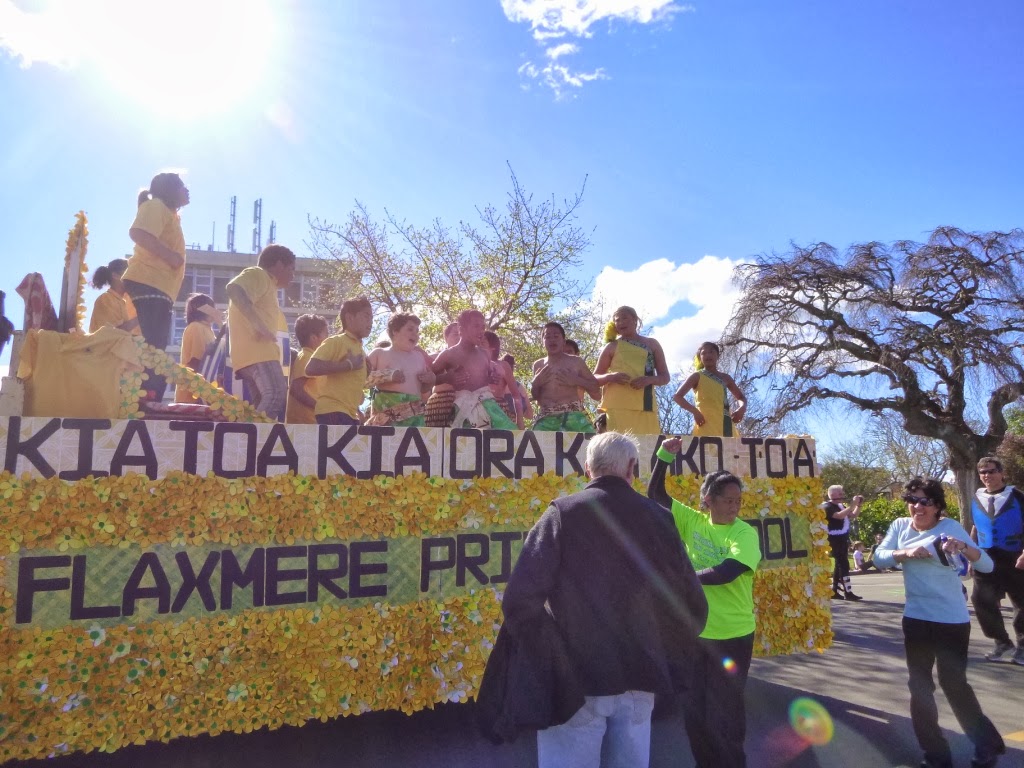
La atracción estrella del festival es el desfile de asociaciones o agrupaciones culturales por las calles de Hastings. Es un desfile al estilo de las cabalgatas de los Reyes Magos, con la diferencia que en lugar de carrozas con reyes orientales aquí hay carrozas con niños del colegio de Flaxmere (La Mina) haciendo Hakas, otras con gente meditando e incluso una con las redactoras del periódico local bailando.


El desfile fue interesante de ver porque reflejó el espíritu integrador de la población kiwi. Todo el mundo tenía su sitio en él. La comunidad india de la zona desfilaba vestida con sus trajes tradicionales mientras bailaban, lo mismo con los coreanos y los chinos. Vimos a la asociación de gente que tiene perros de razas peligrosas pero que están bien educados (los perros) paseando a sus mascotas justo después de la asociación espiritual Falun Dafa (gente que medita).


Participaron también unas niñas que hacen de animadoras al estilo americano, la asociación de gente que tiene motos Harley Davidsons, la orquesta de la Salvation Army (una secta religioso-caritativa que es una mafia muy poderosa) y la familia que hace miel. Desfilaron las señoras mayores que hacen danza del vientre, gente que tiene coches clásicos y un largo etcétera de grupos bastante pintorescos.


Como comentamos en la actualización anterior estamos esperando a que haga buen tiempo para hacer el Tongariro (alias Monte del Destino) Alpine Crossing, pero de momento parece ser que está impracticable a menos que lleves crampones y piolets así que lo hemos ido posponiendo. Intentaremos no marcharnos de Nueva Zelanda sin haberlo hecho.


Entre tanto nos hemos dedicado al dominguerismo siempre que hemos podido, principalmente en los alrededores de Hastings. De este modo hemos descubierto que hace muchos años, cuando las aduanas de Nueva Zelanda no tenían un programa de televisión donde enseñan lo estrictos que son, un señor se trajo semillas de Secuoyas Gigantes de California y las plantó en las faldas de Te Mata.


Estos árboles necesitan siglos para alcanzar el tamaño de los ejemplares del Parque de Yosemite en California, pero aquí tienen buena tierra y parece que crecen a buen ritmo.
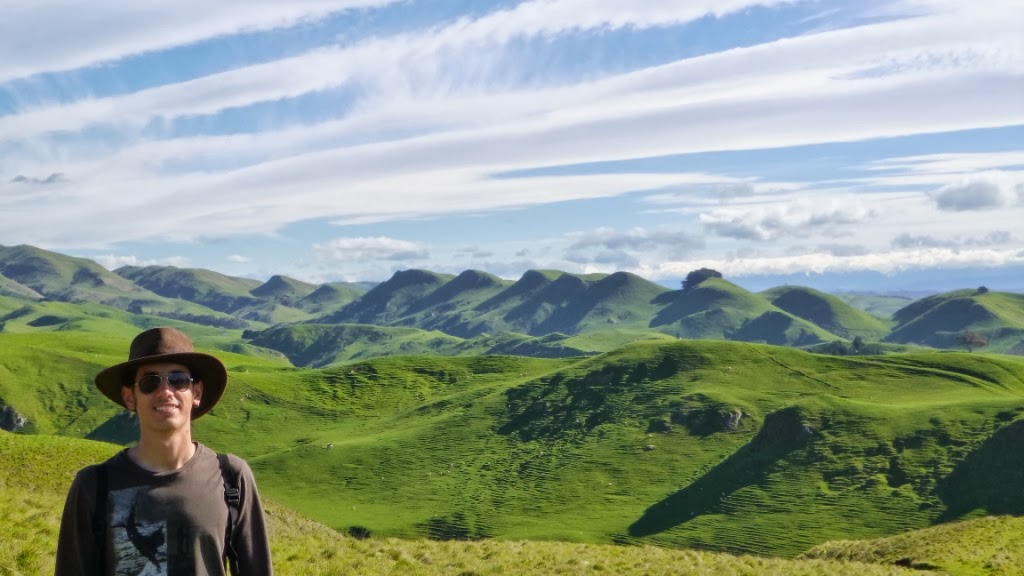
Cuando preparábamos el viaje a Nueva Zelanda en principio la idea era venir un mes. Teníamos serias dudas acerca de qué visitar: ambas islas o sólo una. En todos los sitios donde miramos y todas las recomendaciones que recibimos fueron siempre en la dirección de visitar la isla sur y, en caso de tener tiempo, la norte. La isla sur es más salvaje, tiene paisajes espectaculares, todo es más extremo… vale muy bien. Hemos visitado ambas islas y ciertamente la isla sur es impresionante, ¿pero lo es más que la norte? Os dejamos alguna foto que hemos tomado en Te Mata para que, en caso de querer pasaros por aquí, podáis haceros una idea de cómo es la parte de la isla norte que no parece que vaya a entrar en erupción.


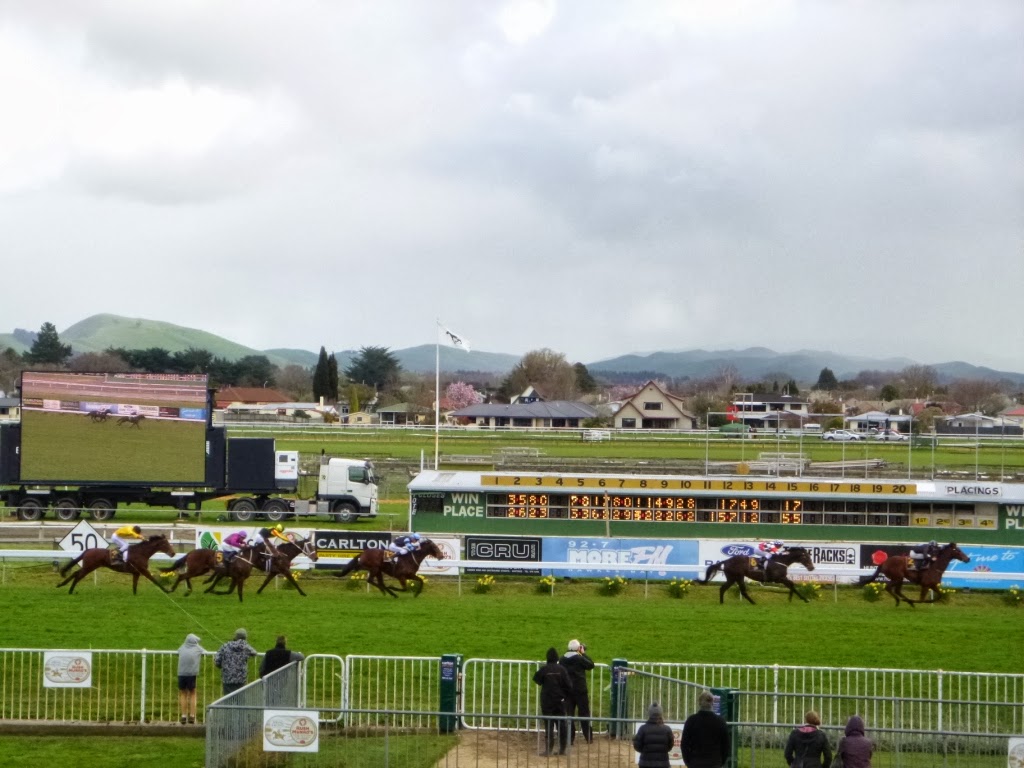
Hace un par de semanas se celebraron carreras de caballos en el hipódromo de Hastings. La entrada era gratuita. Evidentemente fuimos.


Yo supongo que la gracia de las carreras de caballos es apostar, pero yo no pienso arriesgar el dinero intentando adivinar si va a ganar “Lazy Bastard III” o “Cordon Bleu du Lach Azur” o si “Miss Red Caviar” quedará en tercera o cuarta posición mientras “Sir Crazy Lanzelot” queda último. Así que si uno no apuesta tiene que intentar entretenerse con otras cosas.


Nosotros nos dedicamos a pasear por el hipódromo como señoritos andaluces, mirando a los caballos atentamente con semblante serio haciendo ver que éramos capaces de distinguir machos de hembras sin tener que hacer contorsionismo para mirarles los bajos.
El semblante serio hubo que mudarlo al ver a los jockeys. Qué pasmo. Parecen duendes. Son gente de otra raza, en serio. Pequeños, paticortos, delgaditos y desgarbados con ojos achinados, dientes de conejo y orejas en punta. Seguro que tienen voz de pito. Además son, en general, excéntricos a la hora de vestirse.


Curioso también es el corral en el que los caballos calientan ya que en él se encuentran los dueños y dueñas, emperifollados y emperifolladas a más no poder, paseando con sus animales a modo de tío vivo.


La verdad es que el hipódromo fue bonito de ver, los caballos muy grandes todos y los jockeys bastante inquietantes en general. Yo no creo que vuelva a menos que también haya carreras de galgos ya que me muero de ganas de ver cómo son los jockeys que los montan.

Pero la actividad estrella de este lluvioso septiembre ha sido el ciclismo. Hace poco tiempo adecentaron un montón de caminos que unen diferentes bodegas (esta es tierra de vino, aceite y fruta en general) consiguiendo unos 200 km de carril bici que, francamente, está muy bien hecho.


El único pero que le podemos poner es que el camino está plagado de puertas autocerrables que son bastante incómodas de pasar. Afortunadamente algunas tienen carteles humorísticos donde te avisan que las vacas que te encuentres pueden ser malas.


Entre el sábado y el domingo pasado hicimos más de 80 km (llano todo) entre viñedos, manzanos y vacas que resultaron ser muy mansas.


Entre las cosas interesantes que nos encontramos se lleva la palma la vía de evacuación por tsunami, con un bonito cartel anunciándola, pero con el camino cerrado con candado.


Y ya para finalizar la actualización vamos con la anécdota del mes. Si la actualización fuese en catalán con esto de anécdota habría una broma muy fina, avisados estáis los catalanoparlantes. Va de patos. Igual que las plantas están floreciendo, los patos están aumentando la familia. Hemos visto patas con dos patitos y patas con catorce patitos. Pues bien, una de esas familias numerosas consideró que la piscina era un buen lugar para bañarse, sin pensar que es fácil entrar pero imposible salir. Ningún problema, con un poco de paciencia, un tronco y vigilando muy bien al gato, conseguimos que la familia entera se fuese con la fiesta a otra parte.


Y esto es todo por ahora. El día 1 nos vamos a Palmerston North, con una familia que genera su propia electricidad (todavía no sabemos cómo) así que es probable que no actualicemos desde ahí.


PS: Mientras escribía esto, llovía.

Una de los límites de la propiedad donde estamos es un pequeño riachuelo que el gobierno local adecentó hace algún tiempo; antes estaba considerado como un sumidero público. Como decía, el Ayuntamiento arregló las riberas y la llanura de inundación haciendo un camino de gravilla que actualmente es muy utilizado por vecinos para hacer deporte aunque también como atajo para llegar a Havelock North.


El terreno donde se asientan las construcciones de la zona se encuentra elevado unos diez metros respecto a la llanura de inundación. La transición se realiza mediante un montículo de pendiente pronunciada donde se está llevando a cabo una campaña de plantación de árboles y arbustos nativos. El señor que lo coordina y que hace gran parte del trabajo se llama Maurice y esta actividad constituye su “trabajo de jubilado”. 

Maurice es un señor que trabajó muchos años para Monsanto y otras compañías por el estilo y hace un tiempo se jubiló. Una vez jubilado aquí existe lo que se llama “retirement jobs” que básicamente son empleos de media jornada que llevan a cabo jubilados: guías turísticos, atención al ciudadano y, en el caso de Maurice, reforestación con plantas nativas. Él lo coordina todo de tal manera que las plantas son sembradas en tiestos por niños de las escuelas primarias de la zona (cada niño se ocupa de cinco plantas) y  luego los mayores (escuelas secundarias o formación profesional) acompañan a Maurice y las plantan en su lugar definitivo en el terraplén. En el caso del terraplén de nuestra zona fuimos Marina y yo los que acompañamos a Maurice y plantamos alrededor de 500 ejemplares.

Pues bien, después de esta pequeña introducción acerca del riachuelo, la llanura de inundación y el terraplén, os dejo una foto tomada después del episodio de lluvia.


Afortunadamente esto no es un país de tontos en el que la gente construye viviendas en la zona inundable de un río, así que a pesar de la magnitud de la inundación nadie se ha quejado. Ni siquiera los patos.

Enrique & Marina

English version


In New Zealand, spring started officially on the 1st of September. The 1st? Yes, that’s weird for people from the Northern Hemisphere because we complicate our lives trying to match the beginning of the seasons with equinoxes and stuff. And Spring? Yes, let us remind you that seasons go “the other way round” in the Southern Hemisphere, so we’re now getting the warm weather that is leaving our family in Catalonia and other places of Spain.


The first signal of spring was given by the magnolia tree in the garden: in just two days went from naked to be like it is in the pictures above. The second signal was the rain which, in his attempt to keep all the plants in Hawke’s Bay watered, has hardly left us alone for one day.


But, on sunny days, we’ve got a truly impressive floral show, as they grow at an amazing speed. And Hastings has its own “Blossom Festival”, as many other cities!


The main activity was the Blossom Festival Parade with floats from all the schools, associations and local businesses. There were the kids from Flaxmere doing their Haka, some guys meditating at the back of a ute and even the editors of the local tabloid joined the party.


The parade was really interesting to see the inclusive nature of the kiwis.  Everyone had his place in the party. The Hindu community was marching and dancing dressed in their special ceremony clothes, the Koreans and the Chinese came, too. We saw the association of owners of well-trained dangerous breed dogs walking their pets just after the spiritual group Falun Dafa (a bunch of guys who meditate together).


What else… We had a team of American style cheerleaders, the Harley Davidson riders wearing pink laces against the gender violence, the Salvation Army band playing hymns and the family who owns the honey factory at the end of the road. About three groups of belly dancers: girls, ladies and old ladies, classic cars enthusiasts and many other quaint societies.


We said in the past update that we were waiting to do the Tongariro (Mount Doom) Alpine Crossing. Well, we’re still waiting because, so far, the weather hasn’t been good enough to be safe and worth to do the hike. We’ll try not to leave New Zealand without walking this track.


In the meantime, we’ve been simply wandering around the Hastings area. While doing so, we’ve discovered that, lots of years before New Zealand had a TV show about the strictness of their border controls, some fellow brought giant redwood seeds from California and planted them in the slopes of Te Mata.


These trees need centuries to become as big as the Yosemite Park redwoods of California, but there’s good soil here and they looks like they’re growing at a fairly good speed.
We first time we were planning to visit New Zealand we could stay just for a month or two. Our main concern was what to visit: North Island, South Island or both? All the advice leaded us to the South Island and to leave the North for latter with more time. Well, the South Island is certainly wilder than the North, with stunning views, extreme landscape… very nice. After seeing both islands, we can say the South Island is spectacular, but is it more spectacular than the North? Here you have some pictures taken from the Te Mata for you to judge by yourself.


A couple of weeks ago, the Spring races were on in the Hastings Race Course. Free admission. Of course we went.


I guess the fun part of the races is betting, but we’re short enough of money to risk any dollars trying to figure out if the winner is going to be “Lazy Bastard III” or “Cordon Bleu du Lach Azur”. Or whether “Miss Red Caviar” will be the third or the fourth while “Sir Crazy Lanzelot” gets the last to the end.


We walked around the race course like Prince William and Kate Middleton do in Ascot, looking carefully to every horse pretending we were able to distinguish males from females with no need to look at their bottoms.

However, we had to suddenly give up this activity when we saw the jockeys. Wow! They certainly look like elfs. Small, short legs, skinny and lanky, slanted eyes, buckteeth and pointed ears. They may even have squeaky voice. Besides, they’re really eccentric in terms of fashion.


Quite interesting was the warming up yard, too. Place where horses, trainers and wealthy all dressed up horse owners meet. Then this lasts take the horses and make them march in circles as in a live carousel.


That was a pretty interesting Saturday afternoon activity: the horses, very big and nice all of them and the jockeys, quite perturbing in general. I don’t think we’ll go back to the races unless we find greyhound competitions. Enrique is dying to know how their jockeys will look like.

But during this wet September, our main pastime has been riding. Some time ago, lots of paths were arranged to link different wineries of the area (Hawke’s Bay is well known for its wine, olive oil and fruit). Currently the area has 200 km of bike trails which, honestly, are really well done and kept.


If we have to complain about something (which we always have) is that the way is full of gates to keep the stock in the different properties. Luckily, some of the fences have funny posters to aware you about the bad temper of the cows.


Between Saturday and Sunday, we ride a total of about 80 km (totally flat) between vineyards, apple orchards and cows which were better behaved that what the posters said.


Among all the bizarre signals we saw, the winner is this one: a good looking screen telling which way you should follow to scape a tsunami but the gate safely closed with a lock.


And finally, here is the anecdote of the month. It’s about ducks. In the same way the flowers are blossoming, the ducks are extending their families in spring. We’ve found ducks with two ducklings and ducks with fourteen ducklings. One of this large families decided to jump into the pool but what they didn’t think about was that jump in was easy but jump off was impossible for the babies. No problem, we had lots of patience, a log and the cat under surveillance to get them out of there.


And that’s all, folks. The 1st of October we’ll move to Palmerston North. Our hosts there make their own power (we still don’t know how), so we probably won’t update the blog from there.

PS: While I was writing this, it was pouring cats and dogs.

One of the boundaries of the property is a little stream. The council has been taking care of it during the last few years and also the Pattisons who have been planting trees since they settle down here decades ago and the stream was a huge sad public tip.

The council has arranged the river banks and the floodplains leaving a gravel path on each side of the stream which the locals use to go running, cycling or walking and as a shortcut to get to Havelock North.


The ground floor of the surrounding buildings is around 10 meters higher than the floodplains and a steep slope makes the transition from one level to the other. On this slope, the local government is carrying out a vegetation campaign with native trees and bush. Maurice is the leader of this task and this constitutes his “retirement job”.

During his professional life, Maurice worked for Monsanto and other companies of the same business but he’s been retired for a while. Now his job is still related with plants but in a different way. First, he shows how to plant seeds to local primary school kids and each of them will take care of five plants. When the native plants are big enough, older kids from high school or college will place them in their final location by the stream. In this case, Enrique and I did the college kids’ job in the boundary of the property and, at the end, I think we planted around 500 specimens. 

Well, that was the little story about the stream, now my point. After the rain, the stream, the slope and the floodplain look like this.


Luckily, kiwis are bright enough to not build anything on the floodplain, so no one is complaining about the floods. Not even the ducks.

Enrique & Marina